Embracing Older Women in India: With Security, Healthcare And Dignity
India will never be a truly developed nation if its older women are left impoverished and their needs sidelined. Longevity must mean more than just living longer on paper, it must translate into better living with good health, autonomy and dignity as its cornerstones.
The senior citizen population in India is projected to reach 319 million by 2050. This means that older people will outnumber children by 2046. Simultaneously, India is witnessing a clear feminization of ageing. Women are living longer than men, resulting in a sex ratio of 1,065 females per 1,000 males among the elderly. But sadly, longevity does not necessarily mean good health and security. For many older women, particularly those in rural and economically disadvantaged communities - where a large part of the marginalised segment resides - longer life can mean prolonged vulnerability, isolation, and dependence. Our oldest female citizens are often rendered invisible. While much of the conversation around women’s empowerment focuses on younger generations, the older women of our communities, especially those in rural India, remain overlooked and unattended.
Work sans security
The story of India’s elderly woman does not begin in old age; it begins in the decades before she gets there. She spends her entire working life performing unpaid care work, building homes, raising children, and nurturing the workforce of tomorrow. Yet, when she reaches the end of that road, she arrives with nothing. 75% of elderly women have zero savings, and 66% own absolutely no assets. This is not circumstance, it is the direct consequence of a lifetime of unrecognised, uncompensated labour.
This economic depletion does not just leave her destitute, it leaves her powerless. A very large number of aged women are dependent on others (including family members) for their most basic survival needs. With 86% of elders depending on family caregiving, older women sit at the most vulnerable intersection of age and gender. They care for others throughout their whole lives and are left hoping to receive some in return.
Healthcare access remains another pressing concern for older persons. In many remote and rural areas, medical facilities are few and often far away, making regular treatment difficult for the elderly. For older women, this is even more so with financial and mobility constraints, coupled with having to depend on a younger family member to accompany them. Mobile healthcare programmes have helped bridge this gap to some extent, by taking basic medical services directly to communities, but far more needs to be done to bridge this gap.
Dignity through justice
True empowerment for older women requires structural reform. Reliable pension support is essential for older persons, and this is particularly true for women. Ensuring that pensions are stronger and easier to access, can give them a measure of financial security and independence. But financial security alone cannot address the larger issue. Care work in India continues to remain largely invisible and undervalued. When discussions around the care economy take place, the focus is usually on childcare and early development. Far less attention is given to the needs of older persons, even as the country’s ageing population continues to grow. Their role as caregivers is acknowledged, yet their need to become care receivers is frequently overlooked, with systems often slow to respond when elderly women begin to need care. The question we must ask is simple: is this imbalance justifiable?
Ensuring justice for older women means building systems that recognise both these realities. Financial security and livelihood opportunities play a critical role in restoring dignity. Elder self help groups, are one way to perhaps promote both. . Through them, members can access small loans, build modest savings, and support one another when needed. Women who may otherwise feel isolated, could find strength in collective action and may begin to regain some control over their financial lives. With the right backing, this model has the potential to scale up.
Health needs and caregiving practices need to be formulated and scaled up across the country as well, keeping the vulnerable older women in mind. Innovative community-based palliative care schemes can provide essential medical, emotional, and social support to older persons living with chronic illness, and also help their carers navigate this difficult space, ensuring elders receive compassionate care, within familiar surroundings.
Efforts in this direction can offer a more holistic approach to ageing with dignity.
Why this is important
India will never be a truly developed nation if its older women are left impoverished and their needs sidelined. Longevity must mean more than just living longer on paper, it must translate into better living with good health, autonomy and dignity as its cornerstones. Government initiatives are beginning to identify seniors as a powerful demographic segment, and this in turn encourages the market to develop aids, including for mobility, healthcare technology, and services tailored directly for them.
The recent commitment by the government to train 1.5 lakh geriatric caregivers, also acknowledges the long-term needs of the rising elderly population. It is essential for our country to move the needle further with formalised caregiving frameworks and strengthened pension structures for the elderly who lack financial support.
Looking ahead
The women who built our present, deserve far more than survival at its margins. India’s path to a truly inclusive future, must begin with one clear commitment: recognise the economic value of care, compensate those who have given it most, and build systems robust enough to protect them in return.
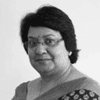
Rumjhum Chatterjee is Vice Chairperson, HelpAge India.
Image used for representational purposes only | Photo Credit: K. Ragesh


 Jobs
Jobs About Us
 Employer Sign In